Warm Up
Helpful Words and Phrases
Listen and repeat. 聞いてリピートしましょう。
-
- ex. Everyone is excited about the upcoming school trip to the mountains next Friday.
-
- ex. The bright lights and loud music of the new amusement park drew a large crowd of people to the city center.
-
- ex. Our school will be the host for the basketball competition this year.
-
- ex. Before the concert started, the famous singer spent an hour in her dressing room getting ready.
-
- ex. "Time is money" is a saying that means we should not waste our time.
Article
Read the article below and answer your tutor's questions.記事を読んで講師からの質問に答えましょう。
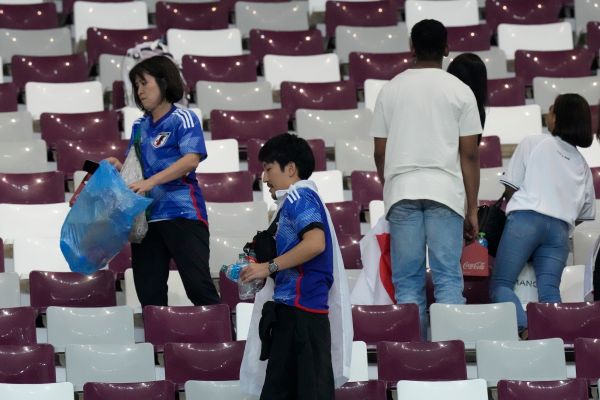
At the upcoming World Cup, many people expect that Japanese soccer fans will continue their famous tradition of cleaning up the stadiums. This practice first drew global attention in France during Japan’s first World Cup in 1998. The tradition has continued every four years, including in Russia and Qatar, where fans picked up garbage and left thank-you notes for the hosts.
Many people from other countries are surprised by this tradition because it is not common for other fans to clean after each match. In 2018, Japanese players also cleaned their dressing room after a loss and left a note in Russian. In 2022, fans wrote notes in Arabic, English, and Japanese on garbage bags to thank the hosts.
Koichi Nakano, a professor, explains that the Japanese fans learned this when they were still in school. In many Japanese schools, students clean classrooms and school grounds every day. This teaches respect and responsibility. A Japanese saying explains the idea: “A bird leaves nothing behind.” Public places in Japan also have few garbage bins, so people often take their waste home. This helps keep areas clean and safe.
This material was based on an article by The Associated Press.
Photo Credits: The Associated Press.
Discussion
Choose a topic and discuss the questions with your tutor.トピックを選び、質問に基づいて議論しましょう。
Cleaning Up Stadiums and Dressing Rooms
- What do you think about Japanese soccer fans cleaning up the stadium after a match? Discuss.
- The article says Japanese players cleaned their dressing room even after they lost. What does this say about Japanese athletes? Discuss.
- Besides sports events, what other public events do people in your country usually clean up after (ex. concerts, festivals)? Discuss.
Learning at School
- Professor Koichi Nakano explains that students learn at school about the tradition of cleaning the places they use. What do you think of this lesson taught in school (ex. it’s important)? Discuss.
- According to the article, this tradition learned in school teaches respect and responsibility. How important are these qualities? Discuss.
- What is something you learned in school that you are still doing? Discuss.
Feedback
表現の幅
語彙をどの程度使えるか
一貫性
論理的な話し方ができるかどうか
音韻
発音が相手にとって
聞き取りやすいか