Warm Up
Helpful Words and Phrases
Listen and repeat. 聞いてリピートしましょう。
-
- ex. Ketchup is a common condiment that people put on burgers and fries.
-
- ex. Every week, garbage trucks take our trash to a landfill outside the city.
-
- ex. The pen is refillable, so you can add more ink instead of buying a new one.
-
- ex. The store now uses compostable bags, which can be absorbed naturally in the soil.
-
- ex. Even small plastic bags can take a long time to break down in the environment.
Article
Read the article below and answer your tutor's questions.記事を読んで講師からの質問に答えましょう。
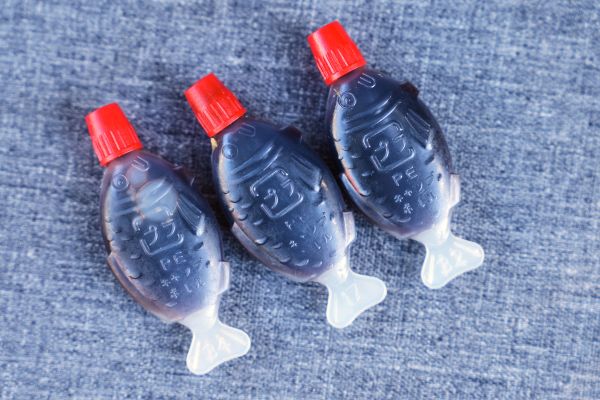
Small plastic soy sauce containers shaped like fish are no longer allowed in South Australia. According to South Australia officials, these specific containers that are often used for condiments harm the environment. The containers are very small, so they can fall on the ground easily or be blown away by the wind.
Because of this, many of these containers end up in the ocean, where animals might eat them by mistake. At the same time, recycling machines cannot process such tiny items. Most of these containers either go to a landfill or become trash in nature. As a result of the new rule, restaurants in South Australia must now use other options. These include refillable bottles, larger containers, small packets, or compostable packaging that breaks down naturally.
According to experts, plastic is a big global problem. Most plastic items are not recycled and can take hundreds of years to break down. Thus, many countries have banned the use of single-use plastics to protect the environment. South Australia’s new rule is part of a bigger effort to reduce plastic waste and keep nature clean.
This material was based on an article by The Associated Press.
Photo Credits: The Associated Press
Discussion
Choose a topic and discuss the questions with your tutor.トピックを選び、質問に基づいて議論しましょう。
Containers and Packaging
- Do you think it is a good idea to ban small plastic containers like the fish-shaped sauce containers? Why or why not? Discuss.
- What kind of container do you usually use, plastic or paper? Discuss.
- Imagine you own a restaurant or a food business. What packaging materials would you use instead of plastic? Discuss.
Plastic Waste and Recycling
- In your opinion, how dangerous is plastic trash in nature? Discuss.
- Do you recycle at home? Why or why not? Discuss.
- What do you think are some good ways to reduce plastic waste from stores? Discuss.
Feedback
表現の幅
語彙をどの程度使えるか
一貫性
論理的な話し方ができるかどうか
音韻
発音が相手にとって
聞き取りやすいか